LetsDefend Review 2026: Honest Breakdown (Plus Best Alternatives)
Honest LetsDefend review for 2026 — alert queue strengths, real limitations, pricing, and the best LetsDefend alternatives for SOC training.
EpicDetect Team
12 min read

LetsDefend Review 2026: Honest Breakdown (Plus Best Alternatives)
You've been grinding LetsDefend alerts. Or you're about to pay for premium and want to know if it's actually worth it.
Either way, you're asking the right question — just maybe not the whole question.
This isn't a "LetsDefend is dead, switch platforms" piece. LetsDefend is genuinely good at what it does. The gap most people feel isn't that the platform failed. It's that alert-queue practice and continuous-incident practice build different muscles — and a lot of learners only train one of them.
Here's an honest LetsDefend review: what it does well, where it falls short, what you'll pay, and when to stay vs. when to add something else.
What Does LetsDefend Actually Do Well?
Credit first — LetsDefend earned its reputation for a reason.
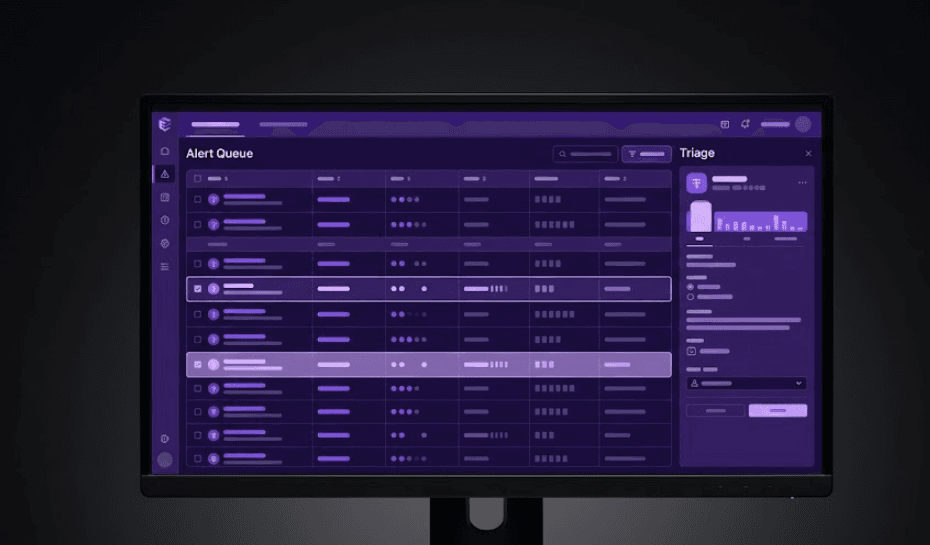
LetsDefend is built around the SOC analyst workflow: alerts land in a queue that looks like a real SIEM/SOAR interface, and you triage them one at a time. Prioritize. Investigate. Decide escalate vs. close. That rhythm is the job for a lot of Tier 1 work, and LetsDefend simulates it better than most platforms that still feel like CTF rooms wearing a blue-team costume.
Pros:
- Alert queue UX — Feels like a real SOC inbox, not a puzzle room
- Browser-based — No home lab, no VirtualBox fights
- Triage workflow — Prioritize, investigate, document, escalate or close
- Free tier exists — Enough to decide if the format works for you
- Resume-friendly — "I triaged X alerts on LetsDefend" is a legitimate talking point
If that's the skill you're missing, staying on LetsDefend is a perfectly rational call.
Okay, But What Are the Limitations?
Here's where we gotta be honest.
Cons:
- Standalone alerts — Each ticket largely resets. Real breaches don't work that way.
- Limited narrative continuity — Findings from alert #3 rarely change how you handle alert #7
- Judgment under ambiguity — You learn to close tickets, not always to tell the story of an escalating incident
- Free tier caps — You'll hit limits if you're serious about volume reps
- Not a SIEM deep-dive — You practice triage workflow, not writing complex SPL from scratch
None of those mean LetsDefend is bad. They mean the next gap might need a different format — which is why people search for LetsDefend alternatives in the first place.
How Much Does LetsDefend Cost?
Pricing changes, so verify on their site before you buy. As of 2026, LetsDefend premium generally runs in the $20–30/month range depending on plan length and promotions.
Real talk on the price:
- That's reasonable for dedicated alert-triage practice if you're actively job hunting
- It's less reasonable if you haven't tried the free tier first
- It's not the only paid option — compare before committing (see our full blue team labs comparison)
Don't pay blind. Run the free tier for a week and see if the queue format clicks.
When Should You Stay on LetsDefend?
Stay (or keep it as your primary) if:
- You specifically need alert-queue reps
- Your interviews keep asking about triage workflow and ticket hygiene
- You're early in SOC prep and the queue format still feels unfamiliar
- You want a platform that looks and feels like a SIEM alert inbox
That's not settling. That's matching the tool to the gap.
When Should You Add Something Else?
Add a second platform when:
- You can clear alerts quickly but still freeze when someone asks you to walk through an investigation out loud
- You want practice where earlier findings change later decisions
- You're building resume talking points that sound like investigations, not isolated tickets
- You've hit the "I know the buttons, but I don't trust my judgment yet" wall
For that gap, story-driven continuous cases beat more standalone alerts. EpicDetect Adventures are built for exactly this — one escalating incident across episodes, not a queue of unrelated tickets.
Best LetsDefend Alternatives (By What You're Actually Missing)
Not every alternative replaces LetsDefend. Most complement it.
TryHackMe SOC path
- Best for: Guided beginner on-ramp and tool familiarity
- Pros: Structured paths, gentle learning curve, broad topic coverage
- Cons: Room-by-room format, not alert-queue triage
- Related: TryHackMe alternatives comparison
Blue Team Labs Online (BTLO)
- Best for: Blue-team CTF scenarios with investigative questions
- Pros: Blue-team only, no offensive content mixed in
- Cons: Self-contained challenges, not continuous incidents
CyberDefenders
- Best for: Deep DFIR artifact work (memory, disk, PCAP)
- Pros: Real forensic artifacts, strong IR depth
- Cons: Heavier setup, less day-to-day Tier 1 triage rhythm
EpicDetect Adventures
- Best for: Continuous-incident judgment and narrative investigations
- Pros: One case builds over episodes, free Season Zero, browser-based
- Cons: Not an alert-queue clone — different format by design
- Related: What Adventures actually are
Home lab (Security Onion, Splunk Free, ELK)
- Best for: Infrastructure depth and custom detection pipelines
- Pros: You control everything, real tool experience
- Cons: Time-heavy setup before you practice analysis
See the full platform comparison for how all of these stack up side by side.
LetsDefend vs. Adventures — Different Jobs
This is the comparison people actually need.
LetsDefend optimizes for: "Can you triage this alert and make the right call on this ticket?"
Adventures optimizes for: "Can you work one incident as it escalates, connect evidence across phases, and explain your reasoning?"
Both skills matter. Most hiring managers ask about both — they just ask in different questions. Alert triage shows up as "how do you handle your queue?" Continuous investigation shows up as "walk me through how you'd investigate a suspicious login."
If you want queue rhythm, keep LetsDefend. If you want continuous-incident judgment, add Adventures. Most people who get good use more than one format.
TL;DR — LetsDefend Is Good, Just Specific
LetsDefend is one of the best alert-queue SOC trainers available. Stay if you need triage reps. Add an alternative when you need continuous incidents, narrative context, and judgment across escalating evidence. Premium runs roughly $20–30/month — verify current pricing, try free first, and don't treat any one platform as the whole answer.
---
FAQs
Is LetsDefend worth paying for in 2026?
If alert-queue triage is your gap and you're actively job hunting, yes — the premium tier is reasonably priced for what it offers. If you haven't finished the free tier or you already clear alerts fast, maybe not yet.
Is there a free LetsDefend alternative?
Yes. Several platforms have free tiers. EpicDetect Adventures Season Zero is entirely free and focused on continuous-incident practice rather than standalone alert queues.
LetsDefend vs TryHackMe — which is better for SOC?
Different jobs. TryHackMe is stronger as a guided beginner on-ramp. LetsDefend is stronger for alert-triage workflow. Many people use both.
Should I quit LetsDefend and switch platforms?
Usually no. Quit only if the format itself is wrong for your current gap. If you still need triage reps, keep it. If you need continuous-incident judgment, add a second platform instead of burning the first.
---
Final thought: The platform debate is a distraction if you're not getting reps. Pick the format that matches the skill you're missing, then do the work.
How EpicDetect Can Help
Want to practice the continuous-incident format for yourself — not multiple choice, an actual investigation? Adventures Season Zero drops you into a story-driven SOC case. It's completely free.
Want structured lessons alongside it? Head to the EpicDetect Atlas for SIEM fundamentals, log analysis, and MITRE ATT&CK-tagged challenges.
New here? Sign up and start for free. No credit card required.
Tags
Related Articles
TryHackMe SOC Level 1: What It Covers (And What to Do Next)
Finished TryHackMe SOC Level 1? Here's what the path actually covers, where it leaves gaps, and the best next steps for blue team training in 2026.

Blue Team Labs Online: Free and Paid Platforms Compared (2026)
Honest 2026 comparison of blue team labs — LetsDefend, TryHackMe, HTB Sherlocks, BTLO, CyberDefenders, Adventures, and home labs.

Phishing Email Analysis Practice: Walk Through a Real Investigation
Want to actually practice phishing email analysis instead of just reading about SPF and DKIM? Here's a real walkthrough, plus where to get more reps.
Is There a Real SOC Analyst Simulator? Here's What Actually Exists in 2026
Searching for a SOC analyst simulator? Here's what actually simulates the job in 2026 versus what's just a quiz with extra steps.